
There’s something disarming about Sephiria. On paper, it sounds like another action roguelite: enter a dangerous dungeon, murder an unreasonable number of monsters, grab upgrades, die, and do it all over again. Except this time, you’re a very determined bunny trying to save the doomed village of Bunnyville, because apparently fluffy woodland creatures have finally had enough of demons ruining their day.
The biggest surprise is how quickly the combat clicks. Sephiria uses a top-down action setup that feels deliberately straightforward, with attacks, movement, dodging, blocking, and other abilities coming together without burying you beneath a mountain of tutorials. That simplicity is important because the game has plenty of complexity waiting elsewhere. Weapons have their own upgrade paths, your character can be customized, and the later encounters demand that you actually understand what your build is doing rather than simply mashing buttons and hoping for the best. Several players have praised the combat as smooth and responsive, while even critical reviews generally acknowledge that the moment-to-moment gameplay is fun.
That said, combat isn’t really the star of the show. The weird little genius of Sephiria is its inventory system, which turns organizing your equipment into an honest-to-goodness puzzle. Artifacts (items that give you your customized skills) and tablets (items that enhance skills) interact with one another depending on where you place them, meaning your inventory isn’t just a place where you dump increasingly powerful junk. You are constantly asking yourself whether that shiny new artifact is worth rearranging half your setup, whether a tablet will improve the item next to it, and whether your carefully assembled combination is actually better than what you already have.
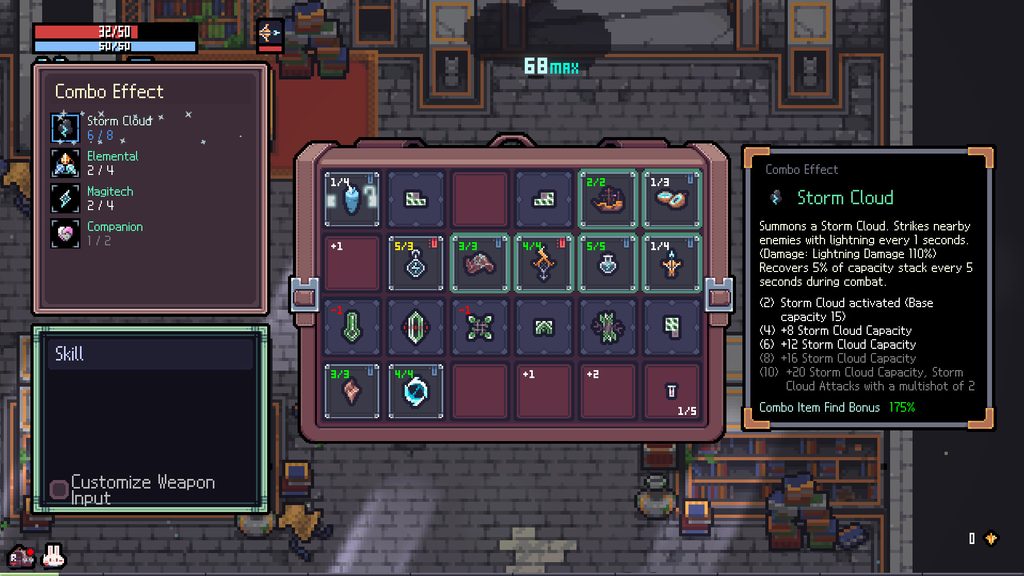
This system also gives Sephiria an impressive amount of build variety. There are six distinct weapons (you do have to unlock five of them), each with more than 50 upgrade possibilities, alongside a sizable collection of artifacts, talents, and other bonuses that can completely change how a run plays. You can chase elemental effects, focus on direct damage, build around companions, or lean into other combinations as you figure out what works. The best part is that experimentation feels meaningful because the game isn’t simply throwing bigger numbers at you every few minutes. The downside is that this same depth can become a little intimidating, particularly once the inventory starts filling up and the game begins throwing increasingly specific effects at you. Even I witnessed a couple skills that didn’t seem to do anything that may or may not be a glitch.
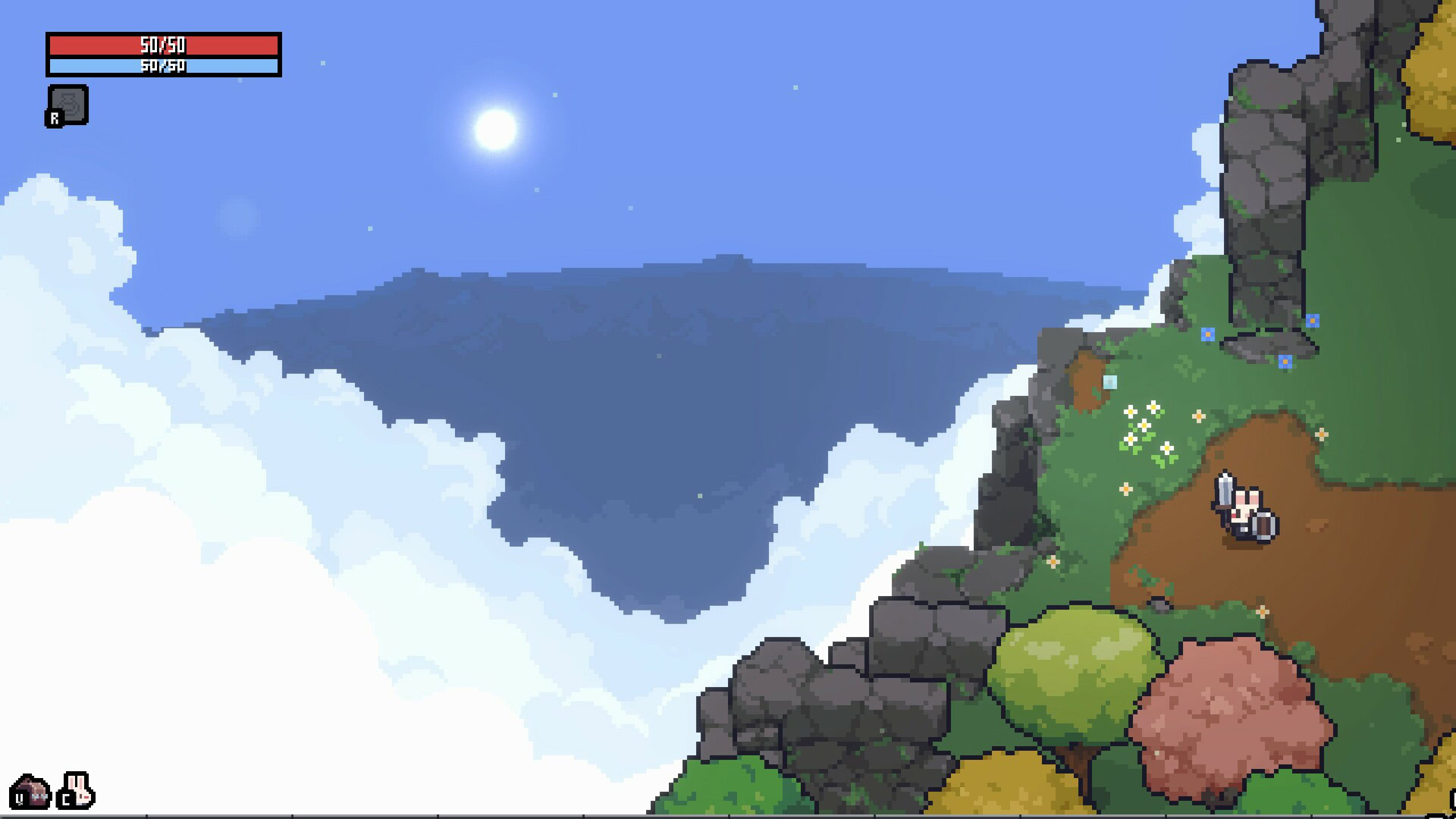
Visually, Sephiria absolutely knows what it wants to be. The pixel art has a colorful, charming quality that makes Bunnyville feel like a cozy little vacation spot, right up until you remember that there is a giant tower full of demons waiting to turn your rabbit into stew. Character designs are adorable without making the game look overly childish, and the enemies have enough personality to keep the screen from becoming an indistinguishable pile of pixels. More importantly, the visual style stays readable when the action gets hectic, which is crucial in a game where dodging attacks and recognizing enemy behavior can make the difference between a successful run and another embarrassing trip home.
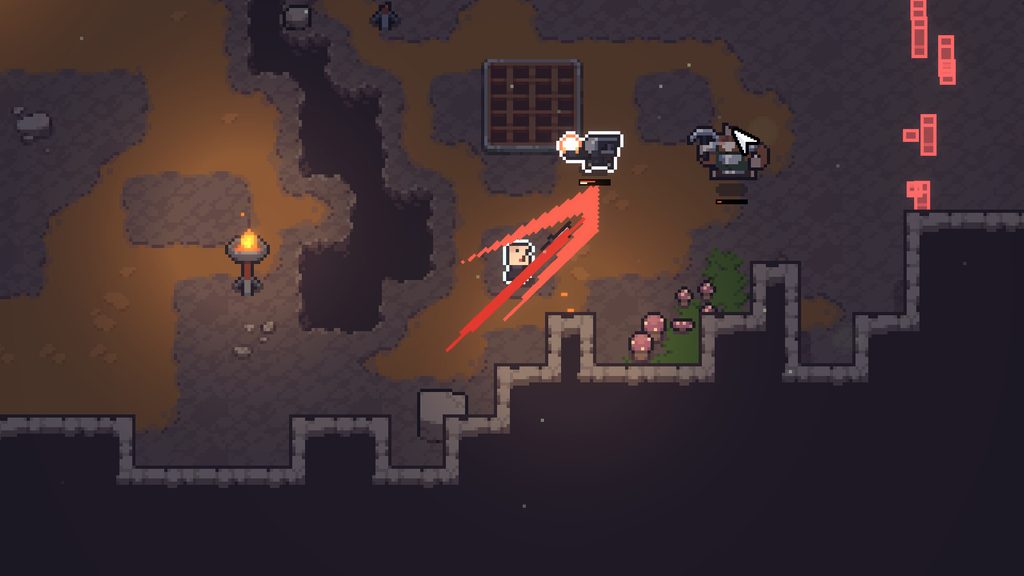
The presentation is helped considerably by the sound design and music. The soundtrack knows when to kick things up during a fight and when to back off so the action doesn’t become an audio assault. There is also a surprisingly cozy quality to the calmer sections, which works beautifully against the game’s increasingly dangerous environments.
Then there’s the content, and Sephiria is not exactly shy about it. The full game features six chapters, more than 60 enemy types, and over 10 bosses, giving you plenty of reasons to keep climbing after you’ve already rescued Bunnyville several times. The variety generally keeps encounters interesting, with later enemies introducing their own quirks rather than simply becoming larger versions of things you’ve already fought. Bosses in particular tend to have distinct mechanics, although this is also where the game’s biggest problems begin to show.
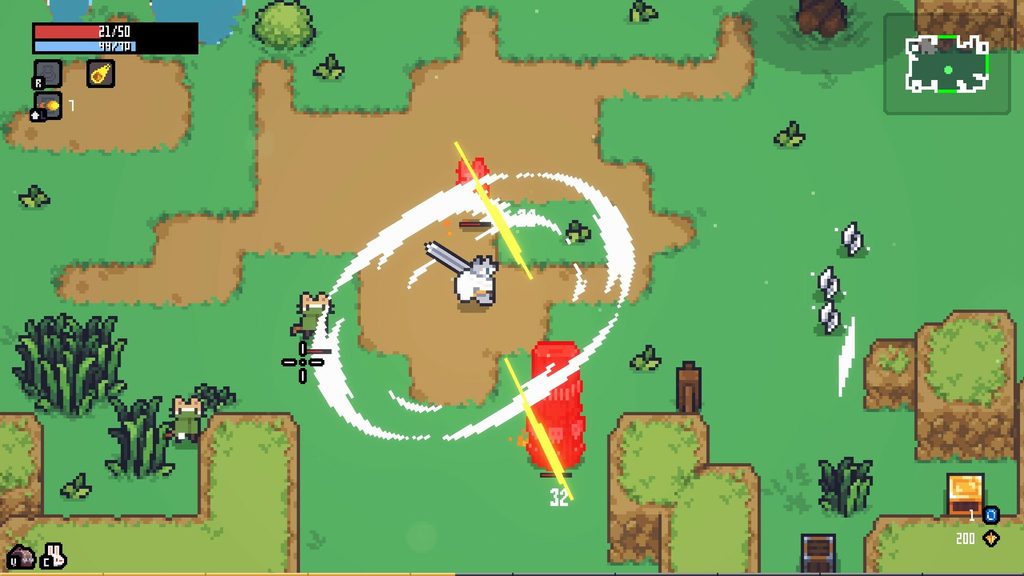
Unfortunately, the difficulty curve gets a little spicy. Most of the campaign does a good job teaching you how to improve your character and build stronger combinations, but the late game can suddenly feel like the developer slammed their hand on a giant “MAKE EVERYTHING HARDER” button. There seems to be significant DPS requirements in the final stages, with some builds that felt perfectly viable earlier suddenly becoming inadequate. The final boss, as alluded to, has an enormous health pool. It’s frustrating because the inventory system encourages experimentation, yet the late-game balance can make experimentation feel like a luxury when the game starts demanding a very specific level of power.
Co-op, though, is a strong addition, especially if you’ve got friends willing to join the bunny apocalypse. Sephiria supports online multiplayer for up to four players, including item trading and the ability to revive fallen teammates. That makes the inventory system even more interesting because you’re no longer thinking exclusively about your own build, because you can coordinate who gets what and build complementary setups. It can also make some of the more chaotic encounters considerably more entertaining, because four players frantically trying to survive while managing their increasingly ridiculous inventories is exactly the kind of nonsense co-op games were invented for. Unfortunately, online connectivity has been one of the game’s recurring weak spots, with some slightly frequent disconnects and, more importantly, a lack of a reliable way to reconnect to an ongoing run.
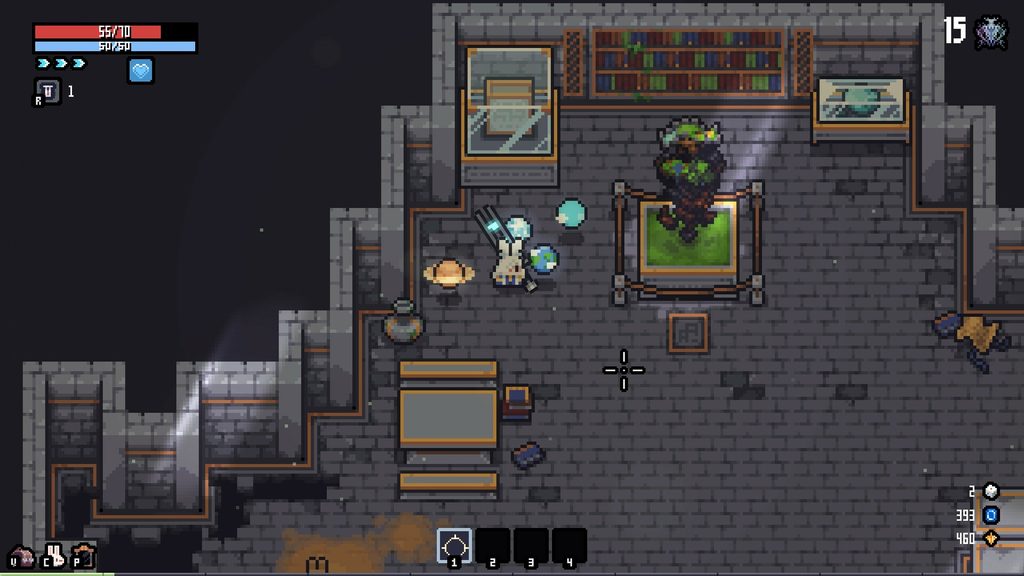
Ultimately, Sephiria succeeds because it takes a familiar genre and finds one genuinely clever way to make it feel different. The combat is responsive, the pixel art is ridiculously charming, the soundtrack knows how to set a mood, and the sheer amount of build experimentation gives every run something to chew on. Its inventory system is the real MVP, turning what could have been a routine roguelite into something that occasionally feels like you’re playing a tiny strategy game inside your action game. The late-game difficulty spike, grindier progression, and co-op connectivity problems keep it from being flawless, and the final boss in particular could use a serious appointment with a nerf bat. However, despite all that, Sephiria is an absurdly easy recommendation for roguelite fans, especially anyone who enjoys the idea of spending nearly as much time organizing a backpack as they do beating the stuffing out of demons.
This review is based on a retail copy of the game provided by the publisher.
Sephiria
-
Gameplay 7/107/10
-
Art Style 9/109/10
-
Content 8/108/10
-
Multiplayer 8/108/10
Sephiria is a charming, surprisingly deep action roguelite that turns inventory management into its secret weapon. Its fantastic combat, adorable pixel art, and ridiculous build variety make it hard to put down, even if late-game balance and multiplayer issues occasionally rain on the bunny parade. This is a roguelite that’s absolutely worth hopping into.